
Traton One OS: The Software Defined Trucks Platform Challenging China’s EV Giants
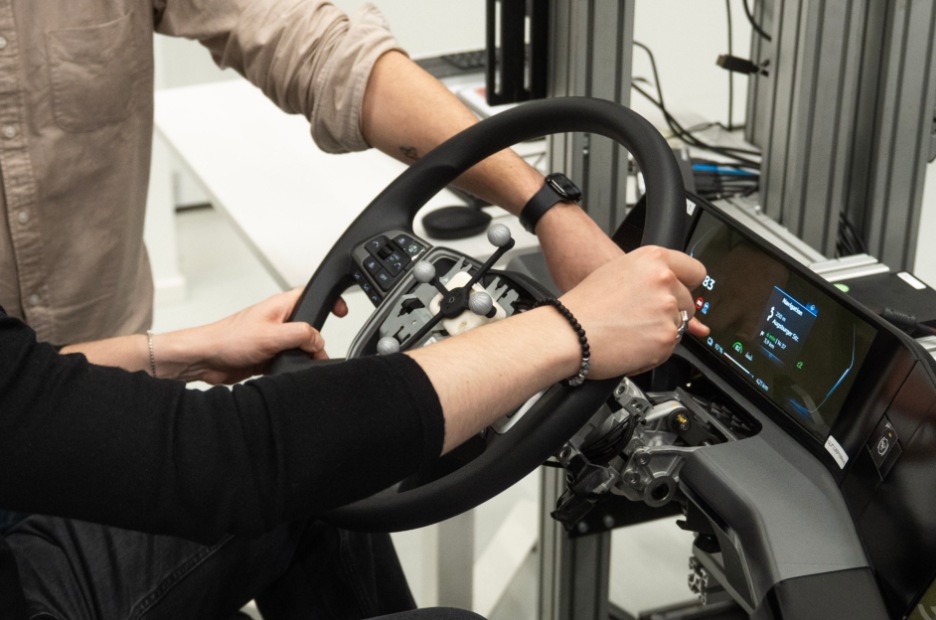
Traton One OS: Can Software Defined Trucks Help Western OEMs Catch China’s EV Giants?
What if your commercial truck could receive over-the-air updates like a Tesla Model Y, predict component failures before they strand you on the highway, and evolve into an autonomous vehicle through software alone? That future just arrived with Traton One OS, a revolutionary software defined trucks platform that represents Western OEMs’ most aggressive response yet to China’s dominance in intelligent vehicle architecture.
The End of the ‘Dumb Truck’ Era
For years, Western commercial vehicle manufacturers have watched Chinese EV giants like BYD, Nio, and Huawei deploy software-defined architectures that treat vehicles as rolling computers. While Chinese trucks and buses received OTA updates and AI-powered predictive maintenance, Scania and MAN trucks relied on hardware-centric designs requiring physical recalls for software fixes.
On March 31, Traton Group announced a paradigm shift. Partnering with Silicon Valley’s Applied Intuition—a simulation and autonomy software unicorn valued at over $6 billion—Traton unveiled Traton One OS, a unified software platform powering all new vehicles across Scania, MAN, International, and Volkswagen Truck & Bus brands.
‘We are bringing the speed and flexibility of modern software development to commercial vehicles,’ said Stefan Teuchert, Traton Group’s Senior Vice President for EE Platforms. ‘This is about closing the gap with Chinese EV makers who have defined the software-first standard.’
Under the Hood: Technical Architecture
Unified Data Access and Predictive Maintenance
Traton One OS employs a white-box modular architecture running on high-performance computers (HPCs) across the vehicle. Unlike legacy truck ECUs that operate in isolation, this software defined trucks platform provides unified data access enabling predictive maintenance capabilities.
- Zero-Downtime Operations: Fleet operators gain real-time mechanical health monitoring, identifying potential failures before they cause roadside breakdowns
- Regulatory Flexibility: The platform supports global regulatory environments while maintaining brand-specific user experiences
- Hardware Agnostic: Supports multiple chipsets, reducing semiconductor supply chain vulnerabilities
The Autonomy Pathway
Perhaps most critically, Traton One OS positions the German-Swedish-American alliance as a competitor in autonomous trucking. The platform’s adaptive middleware serves as foundation for autonomous driving systems, allowing Traton to layer self-driving capabilities onto the same architecture over time.
This approach mirrors strategies employed by Chinese tech giant Huawei with its HI (Huawei Inside) platform and BYD’s e-Platform 3.0, both of which decouple hardware from software to enable continuous feature deployment.
Why Western Investors Should Pay Attention
As an analyst focused on the Chinese EV market, I view Traton One OS as a necessary defensive maneuver. Chinese commercial vehicle manufacturers have captured significant market share in electric buses and medium-duty trucks globally, partly through superior software integration.
Bloomberg reports that Chinese EV makers are aggressively targeting European trucking markets, with BYD and others offering integrated battery and software solutions at price points Western OEMs struggle to match.
Traton’s partnership with Applied Intuition signals recognition that proprietary software development cycles—traditionally taking 3-4 years—cannot compete with the iterative, smartphone-like update cycles Chinese consumers and fleet operators now expect. See our analysis on Chinese EV software ecosystem dominance for deeper strategic context.
Competitive Landscape Conflicts
However, Traton faces headwinds. While the platform launches in 2028—a timeline confirming Reuters analysis of Traton’s gradual electrification strategy—Chinese competitors already deploy similar capabilities today.
The 2026 hardware testing date and 2028 rollout schedule places Traton approximately 3-4 years behind Chinese market leaders in software-defined commercial vehicle deployment. This gap represents both risk and opportunity for Western suppliers.
Implications for the Semiconductor Supply Chain
The Traton One OS announcement carries significant implications for automotive semiconductor investors. By supporting multiple chipsets and creating a unified software layer, Traton reduces dependency on specific silicon vendors while increasing demand for high-performance automotive computing chips.
This aligns with broader industry trends where software-defined architectures actually increase semiconductor content per vehicle while reducing ECU complexity.
Timeline and Market Entry
- April 2026: First integrated ECU hardware testing begins
- 2028: Platform rollout across Scania, MAN, International, and VW Truck & Bus new models
- Post-2028: Autonomous driving feature deployment via OTA updates
Recommended Reading
For readers seeking deeper understanding of how software-defined architectures are reshaping global automotive competition, I recommend Software Defined Vehicles: The Race Between Silicon Valley, Detroit, and Beijing by Dr. Jennifer Chen. This comprehensive analysis examines how Chinese OEMs leveraged software-first development to leapfrog Western competitors—and how platforms like Traton One OS represent the counter-offensive.
The book particularly illuminates the technical debt accumulated by legacy automakers during the combustion era, and why partnerships with Silicon Valley specialists like Applied Intuition have become essential for survival.