
China EV Battery Supply Chain Consolidation: CATL and BYD’s Duopoly Threatens Western Suppliers
China EV Battery Supply Chain Consolidation: How CATL and BYD Are Reshaping Global Markets
What happens when two companies control nearly 70% of the world’s largest EV battery market? According to the latest installation data from January-February 2026, China EV battery supply chain consolidation is accelerating at a pace that should alarm Western automakers and institutional investors. Latest automotive industry reports suggest this concentration trend is outpacing earlier projections by McKinsey and BloombergNEF.
[INTERNAL LINK PLACEHOLDER: See our analysis on BYD’s vertical integration strategy and global expansion]
The Duopoly Deepens: CATL and BYD’s Grip Tightens
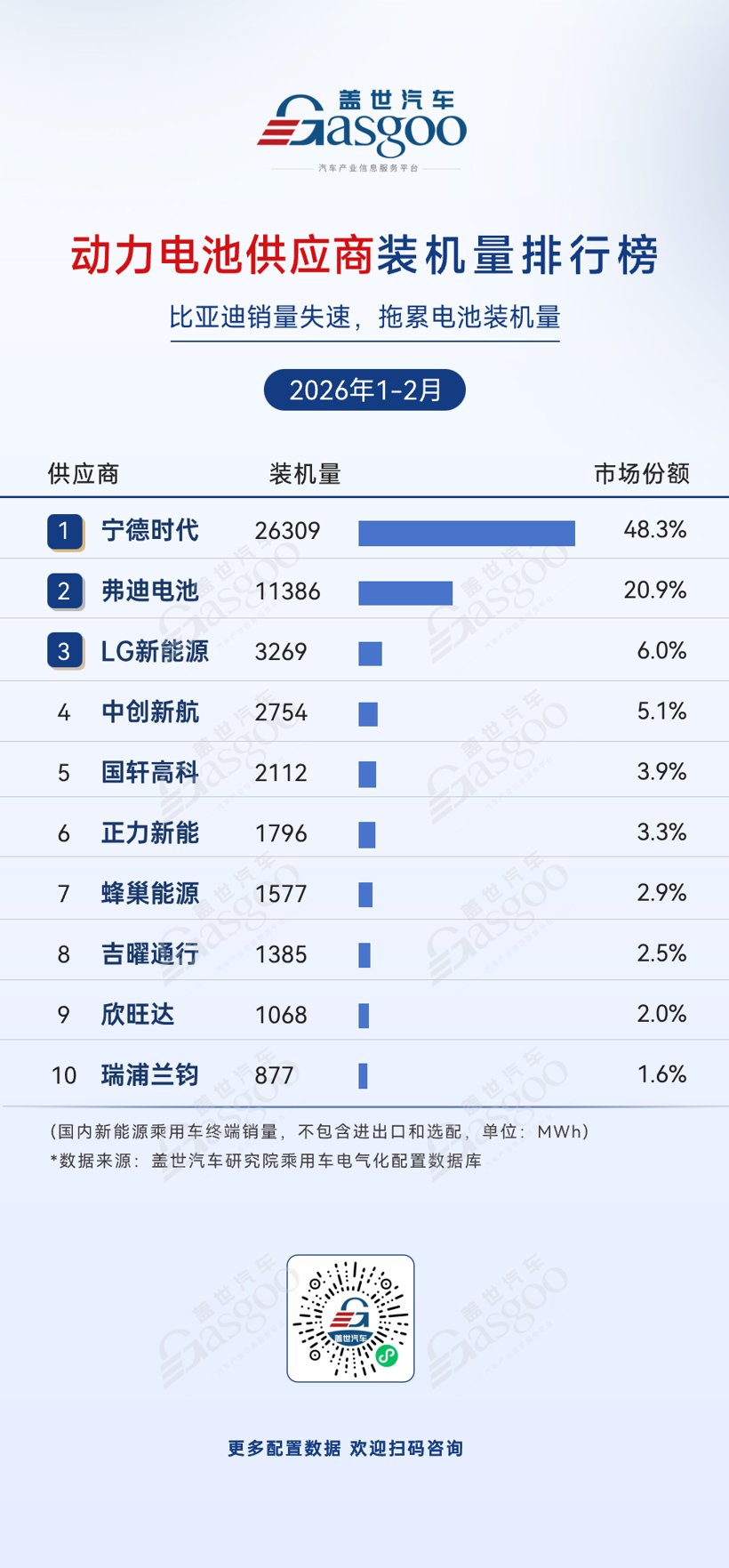
Data from Gasgoo Automotive Research Institute reveals a stark reality: Contemporary Amperex Technology Co. (CATL) captured 48.3% of China’s power battery installation market in the first two months of 2026, totaling 26,309 MWh. BYD’s Fudi Battery followed with 20.9% (11,386 MWh).
Combined, these two giants command over 69% of the domestic market—a concentration level that dwarfs the fragmented competitive landscapes in North America and Europe, where no single supplier holds more than 15% market share.
Why CATL Continues to Dominate
- Vertical integration from lithium mining to module assembly
- Cost advantages through gigascale manufacturing exceeding 500 GWh annually
- Rapid technical response to OEM requirements, cutting development cycles by 30%
The Disappearing Middle: Tier 2 Suppliers Face Existential Pressure
While the top two consolidate power, mid-tier players are engaged in brutal competition for the remaining 30% of market share. CALB (Aviation Industry Corporation of China) holds 5.1%, Gotion High-Tech maintains 3.9%, and Sunwoda sits at 2.0%.
Notably, LG Energy Solution—once a global leader—has fallen to just 6.0% market share in China, down from double-digit percentages just three years ago. This shift reflects broader trends in battery supply chain localization that threaten Western tier-1 suppliers.
Foreign Exodus: Why Global Players Are Losing Ground
The data reveals a troubling pattern for Western and Korean manufacturers. LG Energy’s 6.0% share represents a marginal recovery but fails to reverse the long-term trend of foreign market share erosion in China.
Key factors driving this exodus include:
- Local supply chain response speeds 40-60% faster than international competitors
- Cost advantages of 15-20% for domestic cell producers due to scale and local material sourcing
- Policy preferences for local content in government procurement and NEV subsidies
Vertical Integration vs. Specialization: Two Paths Emerge
The data reveals divergent strategies among survivors. BYD’s Fudi benefits from complete vertical integration with the automaker’s vehicle production, ensuring stable demand but limiting external customer growth. CATL pursues a platform-agnostic strategy, supplying diverse OEMs while maintaining technological leadership through massive R&D spending ($5B+ annually).
This bifurcation creates distinct risk profiles for investors evaluating the China EV battery supply chain ecosystem:
- Integrated models offer supply security but limit scaling flexibility and expose investors to automaker volatility
- Specialized suppliers face margin pressure but retain market agility and diversification benefits
Strategic Implications for Western Markets
Supply Chain Vulnerability
Western automakers relying on Chinese battery imports face increasing concentration risk. With CATL and BYD potentially controlling pricing and cell allocation during supply crunches, diversification strategies become critical for European and North American OEMs seeking to avoid production bottlenecks.
The Cost Competition Trap
Chinese consolidated supply chains deliver LFP batteries at $80-90/kWh—levels unreachable for Western startups and legacy automakers alike. This cost gap threatens to price non-integrated Western EV manufacturers out of the mass market, creating a structural disadvantage that tariffs may not solve.
Recommended Reading
For deeper insight into battery technology geopolitics, consider The Powerhouse: Inside the Invention of a Battery to Save the World by Steve LeVine. This Pulitzer Prize finalist traces the global race for battery supremacy and provides essential historical context for understanding today’s China EV battery supply chain consolidation.
Data sourced from Gasgoo Automotive Research Institute, January-February 2026 installation statistics. Market analysis reflects proprietary research.